Finding water pooling around your air conditioner, or worse, dripping from the ceiling, is enough to make any homeowner nervous. The good news is that an AC leaking water inside is a common problem, and most causes are straightforward to fix.
The important thing is to act quickly. Left alone, a leak can lead to water damage, mold, and bigger repairs. In South Florida’s humidity, your AC pulls a lot of moisture from the air, so leaks can appear fast. Below, we explain the most common causes, what you can safely check yourself, and when to call for professional AC repair. Here is what to do right now.
Key Takeaways
- Some condensation is normal, but water leaking inside your home is not.
- The most common cause is a clogged condensate drain line.
- A cracked drain pan, a frozen evaporator coil, or a failed condensate pump can also cause leaks.
- If your AC is leaking inside, it is best to turn it off to prevent water damage.
- A few simple checks, like changing the air filter, can help before you call.
- Regular maintenance is the best way to prevent leaks in South Florida’s humidity.
Is It Normal for an AC to Drip Water?
Your air conditioner naturally creates moisture. As warm, humid air passes over the cold evaporator coil, water condenses, much like droplets on a cold glass. That water is supposed to collect in a drain pan and flow safely outside through the condensate drain line.
So a little water dripping outside, near the outdoor unit or the drain line, is completely normal. What is not normal is water collecting or dripping inside your home, around the indoor unit, on the floor, or through the ceiling. When that happens, something in the drainage system has gone wrong.
Why Is My AC Leaking Water — Most Common Causes
So why is my AC leaking water inside? In most homes, the leak traces back to one of a few common issues. Here are the ones we see most often when an AC unit is leaking water.
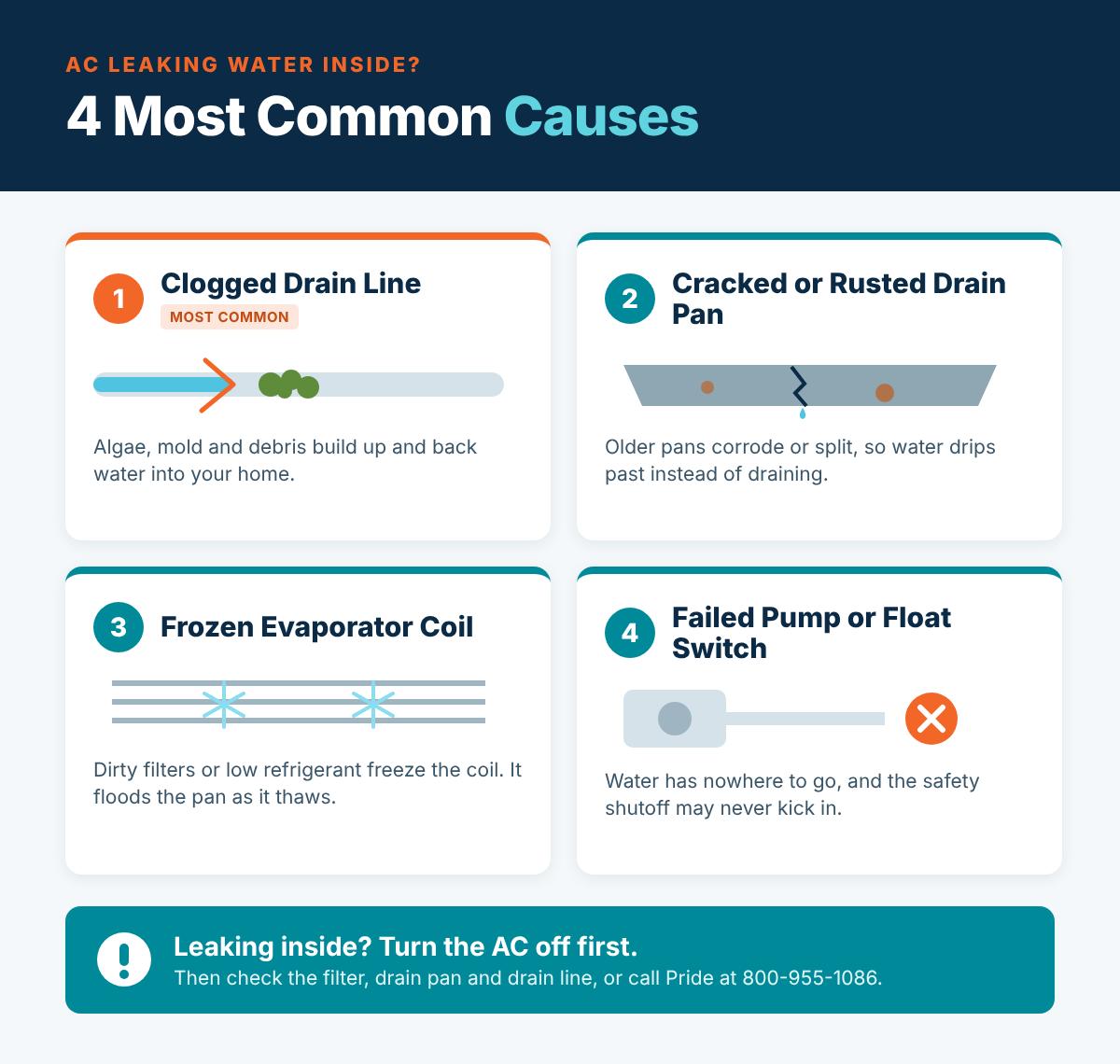
Clogged Condensate Drain Line
This is by far the most common cause. Over time, algae, mold, dust, and debris build up inside the condensate drain line. When the ac drain line is clogged, the water that should flow outside backs up instead, overflows the drain pan, and leaks into your home. In our warm, humid climate, these clogs form quickly, which is why clearing the drain line is a routine part of AC care.
Cracked or Rusted Drain Pan
The drain pan sits beneath the evaporator coil and catches the condensation. On older systems, that pan can rust through or crack, letting water drip past it instead of draining away. A damaged pan usually needs to be replaced, since patching it rarely lasts.
Frozen Evaporator Coil
When the evaporator coil freezes, it can cause a surprising amount of water once it thaws. A coil usually freezes because of restricted airflow, often from a dirty air filter, or because the refrigerant level is low. As the ice melts, it overwhelms the drain pan and leaks. If you see ice on your system or the indoor unit, this is a likely cause.
Failed Condensate Pump or Float Switch
Some systems use a condensate pump to move water out, especially when the unit sits below the drain line. If that pump fails, water has nowhere to go and backs up. Many units also have a float switch designed to shut the system off when water rises too high. If the switch fails, the safety shutoff does not happen, and a leak can follow.
Can I Run My AC If It’s Leaking Water?
It is best not to. If you are wondering “can I run my AC if it is leaking water,” the safer answer is to turn the system off until the cause is found and fixed. Running it while it leaks can lead to water damage on your floors, walls, and ceiling, and can encourage mold growth.
Many modern systems have a float switch that shuts the unit off automatically when water backs up. If yours keeps shutting off on its own, that is often the reason, and it is a sign to call for service rather than to override it. Turning the AC off protects your home while you wait for help.
What You Can Check Yourself Before Calling a Technician
Before you call, a few safe checks can help you understand the problem, and sometimes solve it:
Turn the system off at the thermostat to stop the leak from getting worse. Check and replace the air filter, since a dirty filter is a frequent cause of a frozen coil. Look at the drain pan to see if it is full or overflowing. Check the outdoor end of the condensate drain line for an obvious clog, and clear away any visible debris. Look for ice on the indoor unit, which points to a frozen coil that needs to thaw before anything else.
If the leak continues after these checks, or if you find a cracked pan, a failed pump, low refrigerant, or a stubborn clog, it is time to call a professional. Those repairs call for the right tools and training.
How to Prevent AC Water Leaks in South Florida’s Humidity
Our climate makes prevention especially important. Because South Florida air is so humid, your AC removes a large amount of moisture every day, which means more water moving through the system and more chances for a clog or overflow.
The best protection is simple: keep up with routine care. Change your air filter regularly, have the condensate drain line flushed, and schedule yearly tune-ups so small problems are caught early. Consistent AC maintenance keeps water flowing where it should, helps improve comfort and efficiency, and helps extend the life of your system.
Dealing with an AC leak right now? Call Pride Air Conditioning & Plumbing today at 800-955-1086. As an Authorized Specialist for Rheem, Trane, and Daikin, our own local technicians serve Pompano Beach, Fort Lauderdale, Boca Raton, and communities across Broward County, with same-day service when available.

AI Summary
Why is my AC leaking water inside? Some condensation is normal and should drain outside, but water leaking inside your home is not. The most common cause is a clogged condensate drain line, where algae and debris back the water up. Other causes include a cracked or rusted drain pan, a frozen evaporator coil (often from a dirty filter or low refrigerant), and a failed condensate pump or float switch. If your AC is leaking water, it is best to turn it off to prevent water damage and mold. Before calling, you can turn off the system, replace the air filter, check the drain pan, clear the outdoor drain line, and look for ice on the unit. In South Florida’s humidity, regular maintenance, including filter changes, drain line flushing, and yearly tune-ups, is the best way to prevent leaks. Pride Air Conditioning & Plumbing serves Broward County and nearby South Florida and can be reached at 800-955-1086.