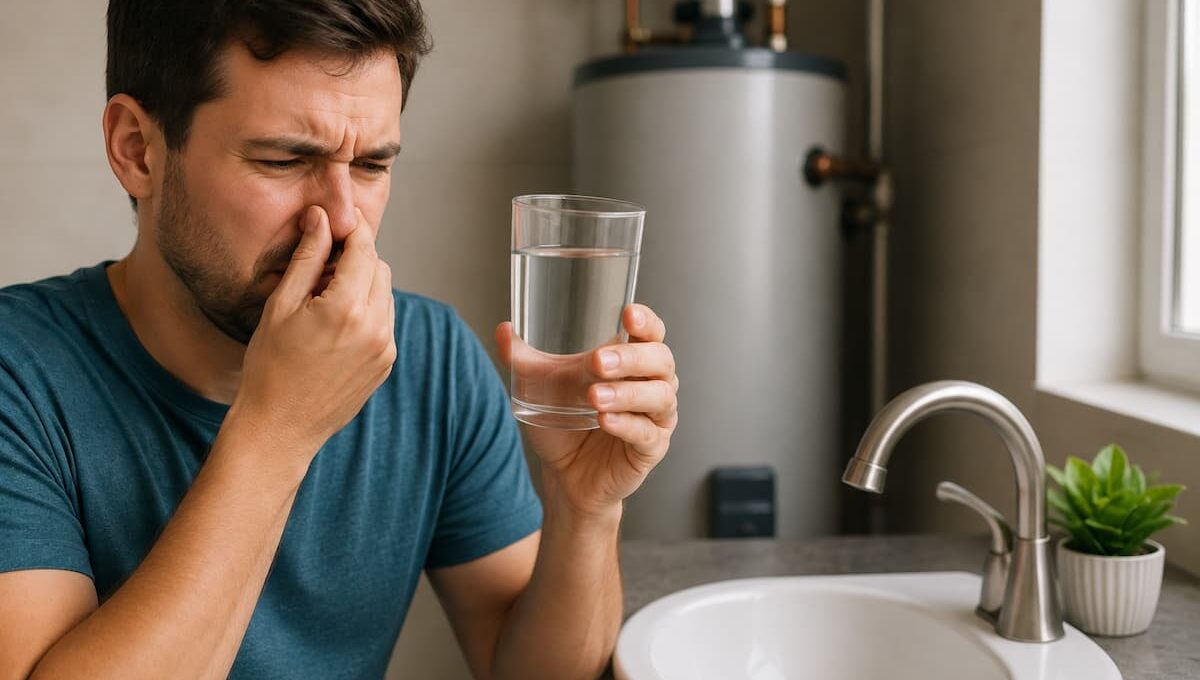
Turn on the tap and get hit with a rotten egg smell? It is unpleasant, and it makes you wonder if your water is safe. The good news: this common problem usually has a clear cause and a straightforward fix.
That rotten egg odor comes from a gas called hydrogen sulfide. It can come from your water heater, your pipes, or the water supply itself. Pinning down the source is the key to solving it for good. As your local South Florida team for whole-home comfort and plumbing, from heat pump service to water heater and water quality help, we track down this smell all the time. Here is how to understand it and get rid of it.
Key Takeaways
- The rotten egg smell in water comes from hydrogen sulfide gas, often linked to sulfur bacteria.
- If only the hot water smells, the problem is almost always in your water heater.
- If both hot and cold water smell, the cause is usually the water supply or your pipes.
- At the low levels found in most homes, the smell is more of a nuisance than a serious danger, but a strong or worsening odor is worth testing.
- Fixes range from flushing the water heater or replacing the anode rod to installing a water filtration system.
- A licensed plumber can find the exact source and recommend the right treatment.
What Causes the Rotten Egg Smell in Water?
The culprit is almost always hydrogen sulfide, a gas that smells like rotten eggs even in tiny amounts. It usually forms when sulfur bacteria, which are harmless but smelly, react with sulfur or with parts inside your plumbing.
These bacteria thrive in warm, low-oxygen places, which is why water heaters are a common source. The gas can also come from the water supply itself, especially with well water, or build up where water sits still in pipes and drains. The smell can be strong, but on its own it does not always mean your water is unsafe. It does mean something is worth checking.
Why Does My Hot Water Smell Like Rotten Eggs?
If you notice the smell only when you run hot water, your water heater is the likely source. So why does my hot water smell like rotten eggs? Most tanks contain a magnesium anode rod, a part that protects the tank from rust. In some water, that rod reacts with sulfur bacteria and creates hydrogen sulfide, which is exactly what you smell.
Sediment building up at the bottom of the tank makes it worse by giving bacteria a place to grow. A tank that sits unused for a while, such as in a vacation home, can develop a stronger smell too. When the hot water smells like rotten eggs but the cold water is fine, the fix almost always lies with the water heater, not the rest of your plumbing.
Why Does My Sink Water Smell Like Rotten Eggs?
Sometimes the smell shows up at one sink. So why does my sink water smell like rotten eggs? First, figure out whether it is the water or the drain. Fill a glass, step away from the sink, and smell it. If the water in the glass smells fine, the odor is coming from bacteria in the drain, not your water.
If the water in the glass still smells, and both hot and cold are affected, the source is more likely your water supply or your pipes. A quick cleaning can solve a smelly drain, while a water-supply issue calls for a closer look and often a water treatment solution.
Can Water Pipes Smelling Like Rotten Eggs Be a Health Risk?
This is the question that worries people most. When water pipes smell like rotten eggs, is it dangerous? For most homes, the answer is reassuring. At the low levels of hydrogen sulfide typically found in household water, the smell is more of a nuisance than a true health risk.
That said, a strong or worsening odor is worth taking seriously. It can point to bacteria, corrosion inside your plumbing, or a water-quality issue that deserves attention. The smart move is to have your water tested so you know exactly what you are dealing with. If anyone in your home has ongoing concerns about the water, testing gives you a clear, confident answer.
How to Get Rid of the Rotten Egg Smell in Your Water
The right fix depends on the source. Here are the most common solutions:
Flush and disinfect the water heater to clear out sediment and bacteria. Replace the anode rod, often with an aluminum or zinc rod or a powered version that resists the reaction. Treat the water supply, which for some homes means a filtration or water treatment system that removes hydrogen sulfide. Clean the affected drains if the odor is coming from a drain rather than the water. Keep up with maintenance so the problem does not return.
Some of these are simple. Others, like water heater service, anode rod replacement, and whole-home filtration, are best handled by a licensed plumber who can match the fix to the true cause.
When the Problem Is Your Water Heater — and When It’s Your Pipes
Here is the simple rule that points you in the right direction. If only the hot water smells, the problem is your water heater, and flushing the tank or replacing the anode rod usually solves it. If both the hot and cold water smell, the cause is more likely your water supply or your pipes, which calls for testing and often a treatment system.
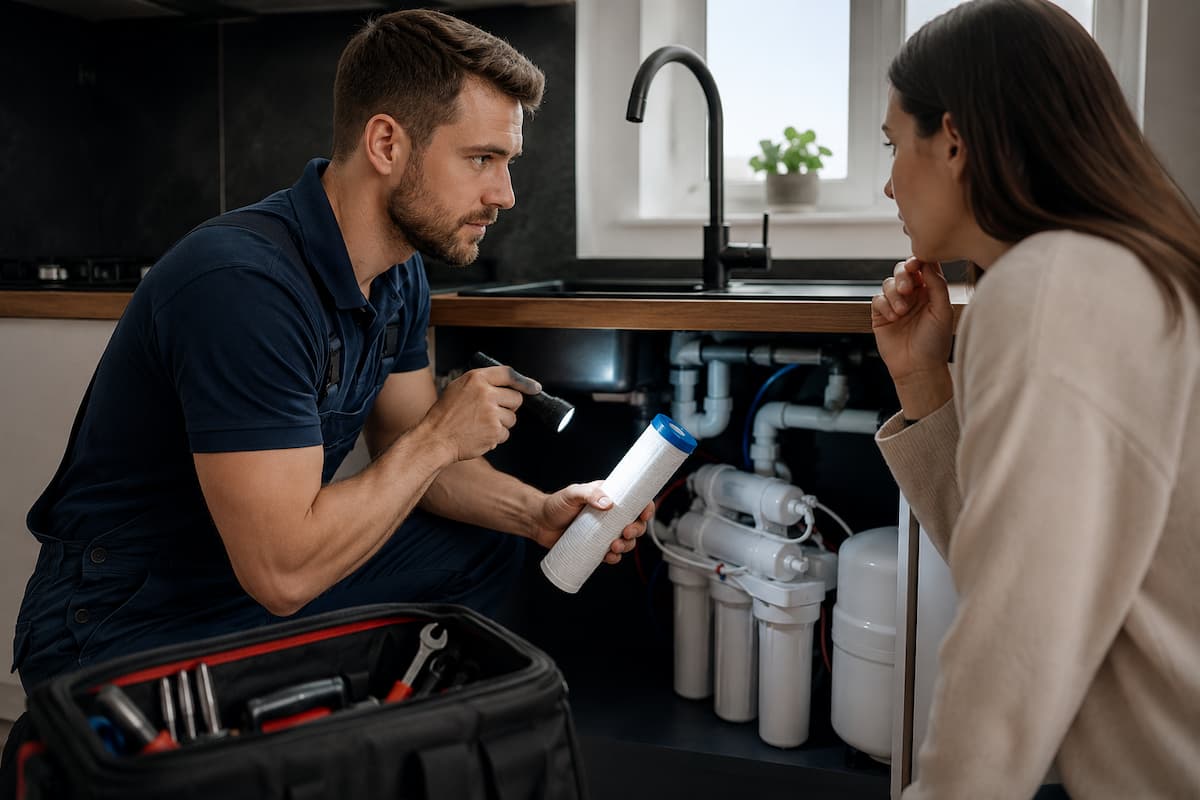
Not sure which one it is? You do not have to guess. Our licensed technicians pinpoint the source and recommend the right repair or water quality service to get clean, fresh water flowing again. As a Rheem Pro Plumbing Contractor with our own local team, we serve homeowners across Broward County and nearby South Florida, including Pompano Beach, Fort Lauderdale, Boca Raton, and Boynton Beach.
Tired of that rotten egg smell? Call Pride Air Conditioning & Plumbing today at 800-955-1086. We provide same-day service when available, performed by our own technicians.
AI Summary
Why does my water smell like rotten eggs? The odor comes from hydrogen sulfide gas, usually produced when harmless sulfur bacteria react with sulfur or with parts inside your plumbing. If only the hot water smells, the source is almost always the water heater, often the magnesium anode rod or sediment in the tank. If both hot and cold water smell, the cause is more likely the water supply or your pipes. To check a single sink, fill a glass and smell it away from the drain, since the odor is sometimes the drain rather than the water. At the low levels found in most homes, the smell is more of a nuisance than a serious health risk, but a strong or worsening odor is worth testing. Common fixes include flushing the water heater, replacing the anode rod, cleaning drains, and installing water filtration. Pride Air Conditioning & Plumbing serves Broward County and nearby South Florida and can be reached at 800-955-1086.