A slab leak is one of the most stressful plumbing problems a homeowner can face. Hidden under your concrete foundation, it can quietly waste water and damage your home for weeks before you notice. Catching it early makes all the difference.
Here in South Florida, most homes are built on a concrete slab, so slab leaks are more common than many people expect. The good news: the warning signs are easy to spot once you know what to look for, and modern detection makes finding the leak far less invasive than it used to be. If you suspect a problem, fast, professional plumbing repair can stop the damage before it spreads. Here is everything you need to know.
Key Takeaways
- A slab leak is a leak in a water line beneath or inside your home’s concrete foundation.
- Common causes include pipe corrosion, abrasion, high water pressure, and poor installation.
- Warning signs include warm floor spots, the sound of running water, a spike in your water bill, and damp or warped flooring.
- A simple water meter test can tell you whether water is escaping somewhere in your system.
- Modern slab leak detection finds the leak without tearing up your floors.
- Repair options range from a spot repair to rerouting a line or repiping the home.
What is a Slab Leak
A slab leak is a leak in one of the water lines that run beneath or within the concrete slab your home sits on. These pipes carry either hot and cold water to your fixtures or wastewater away from them, and when one springs a leak under the slab, the water has nowhere to go but into the ground and, eventually, into your home.
Because the pipes are hidden in concrete, a slab leak is easy to miss at first. Left alone, it can undermine your foundation, ruin flooring, and lead to mold and mildew. That is why knowing the signs of a slab leak matters so much.
What Causes Slab Leaks
So what causes slab leaks? Usually it comes down to how the pipes age and what surrounds them. The most common causes include:
- Corrosion, where older copper pipes develop tiny pinhole leaks over time, which is common in humid, mineral-rich conditions.
- Abrasion, where pipes rub against concrete, gravel, or other pipes until they wear through.
- High water pressure that stresses the lines.
- Poor original installation, such as bent or kinked pipes.
- Shifting soil or a settling foundation that puts strain on the plumbing.
Age plays a role in all of these, which is why older homes are more prone to slab leaks.
Warning Signs of a Slab Leak
Most slab leaks give you clues before they cause major damage. Watch for these warning signs.
Warm Spots on the Floor
If part of your floor feels unusually warm, it may sit right above a leaking hot water line. A warm or hot spot that you cannot explain, especially on tile, is a classic sign of a slab leak on the hot water side.
Sound of Running Water When Everything Is Off
Turn off every faucet and appliance, then listen. If you still hear water running, hissing, or trickling, water may be escaping from a pipe under the slab. It is one of the most telling early signs.
Unexplained Spike in Your Water Bill
A slab leak wastes water around the clock. If your water bill suddenly jumps without any change in how much water you use, a hidden leak is a likely reason. A steadily climbing bill is worth investigating right away.
Damp Carpet, Warped Flooring, or Cracks
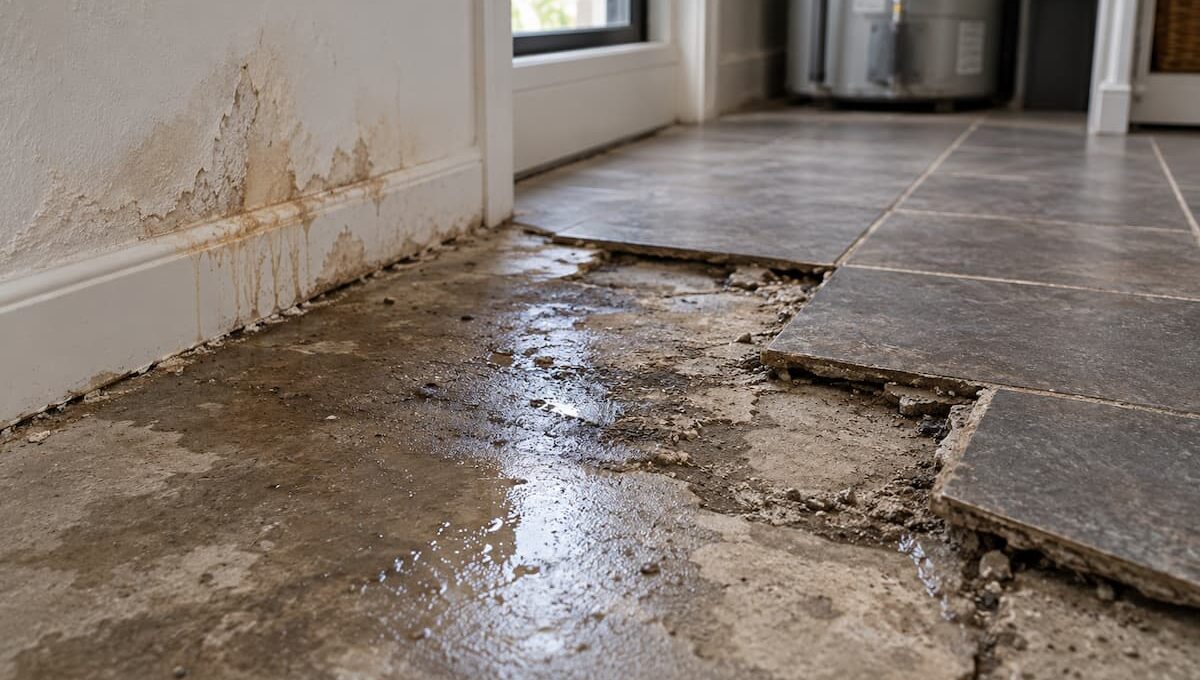
As water builds up under the slab, it works its way into your home. Look for damp or warm carpet, warped or buckling wood, loose tile, a musty smell, or new cracks in your floor or walls. Persistent moisture like this often points to a leak below.
How to Check for a Leak Using Your Water Meter
Not sure how to tell if you have a slab leak? Your water meter is a simple, reliable place to start. Here is how to run the test:
First, turn off all water inside and outside your home, including faucets, the dishwasher, the washing machine, and ice makers. Next, find your water meter and look at the leak indicator or the dial. Note its position, then wait about 20 to 30 minutes without using any water. Check the meter again. If the reading has moved even though everything is off, water is escaping somewhere in your system, which may be a slab leak. This test cannot tell you exactly where the leak is, but it confirms whether you have one, and that is your signal to call a professional.
How Plumbers Detect Slab Leaks Without Breaking Floors
In the past, finding a slab leak meant breaking up floors to hunt for the pipe. Today, professional slab leak detection is far less invasive. Our licensed technicians use specialized tools to pinpoint the exact spot before any concrete is touched.
Acoustic listening equipment picks up the sound of water escaping under the slab. Thermal imaging spots temperature differences from a hot water leak. Pressure testing confirms which line is losing water, and line-locating tools trace the pipe’s path. Together, these methods let us find the leak accurately, so any repair is targeted and as small as possible.
Repair Options: Spot Repair, Reroute, or Repipe
Once the leak is located, there are usually three ways to fix it, and the right choice depends on the pipe’s age and condition.
A spot repair opens a small access point to fix the single damaged section, which works well for a newer system with one isolated leak. A reroute bypasses the bad section by running a new line, often overhead or through walls, avoiding the slab entirely. A repipe replaces the aging pipes throughout the home, frequently with durable PEX piping, and is the best long-term choice when a system keeps developing leaks. Depending on access, plumbers may reach a pipe by tunneling under the slab rather than jackhammering through your floor.
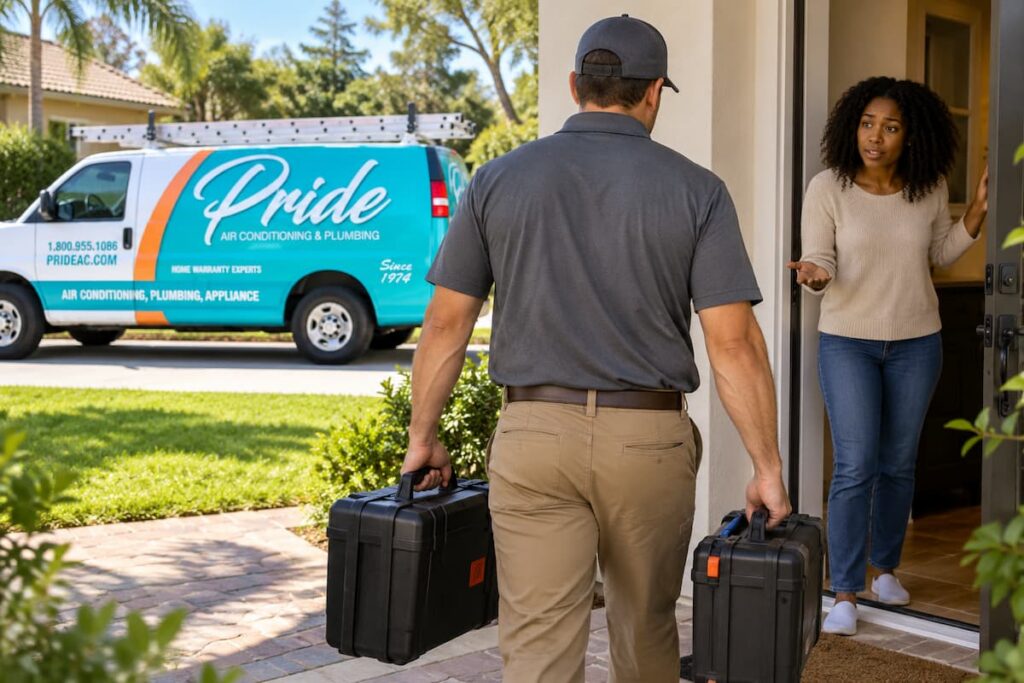
Slab leaks can occur on water supply lines or on drain and sewer lines beneath the slab. When a buried drain line is the culprit, related services such as drain cleaning and line inspection are part of getting everything flowing correctly again. Our own local technicians handle the full range of under-slab plumbing. Call Pride Air Conditioning & Plumbing today at 800-955-1086, and we will diagnose the problem and recommend the right fix, with same-day service when available.
Does Homeowners Insurance Cover Slab Leaks?
This is one of the first questions homeowners ask, and the answer depends on your policy. In many cases, homeowners insurance helps cover the resulting damage from a sudden slab leak, such as damaged flooring, but often does not pay to repair the pipe itself or to access it. Coverage varies widely, so the best step is to review your specific policy or call your insurance provider before work begins.
It is also worth knowing the difference between insurance and a home warranty. A home warranty is a service contract, not insurance, and Pride’s plans can help cover parts and labor for many common plumbing repairs, giving you fewer surprise costs. Coverage depends on your specific plan, and our local team is happy to explain your options.
 AI Summary
A slab leak is a leak in a water line beneath or within your home’s concrete foundation. Common causes include pipe corrosion and pinhole leaks in older copper, abrasion, high water pressure, poor installation, and shifting soil. Warning signs include warm spots on the floor, the sound of running water when everything is off, an unexplained spike in your water bill, and damp carpet, warped flooring, or new cracks. To check, turn off all water, note your water meter, wait 20 to 30 minutes, and see if the reading moves. Professional slab leak detection uses acoustic listening, thermal imaging, and pressure testing to find the leak without breaking floors. Repairs range from a spot repair to rerouting a line or repiping the home, often with PEX. Homeowners insurance may cover resulting damage but often not the pipe repair, so check your policy. Pride Air Conditioning & Plumbing serves Broward County and nearby South Florida and can be reached at 800-955-1086.