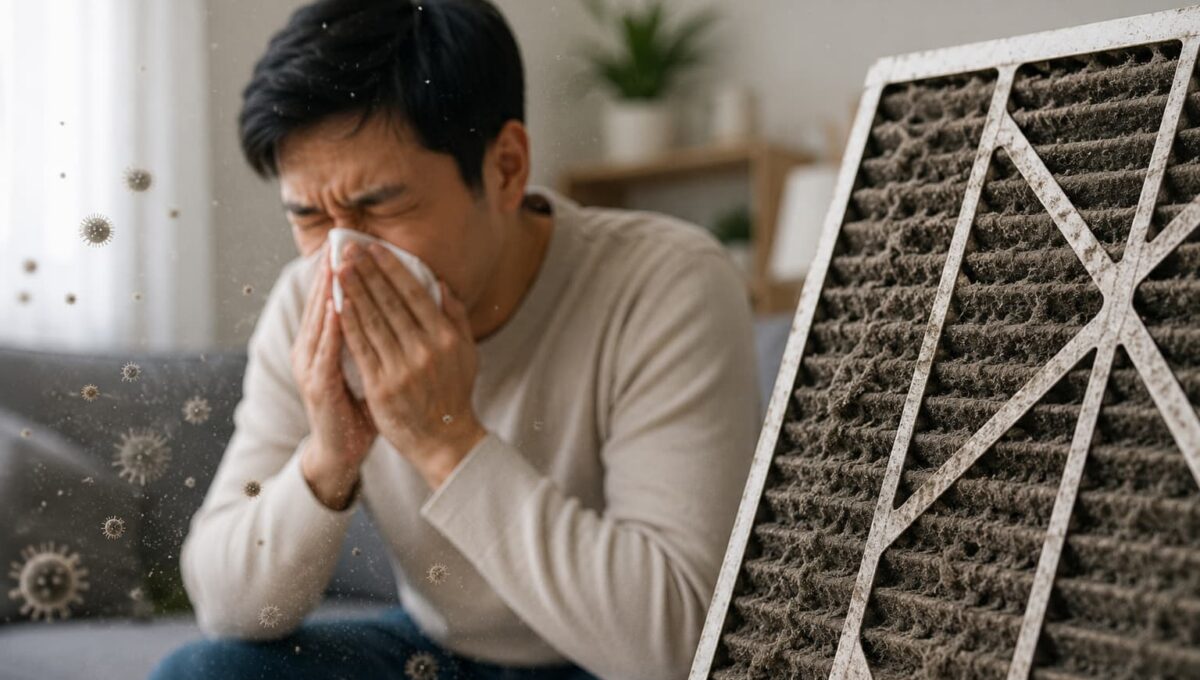
Short answer: a dirty air filter will not give you a virus, but it can make the air in your home harder to breathe and worse for your health. When the filter clogs, dust, pollen, mold spores, and other particles build up and get pushed back into the rooms you live in. Over time, that can trigger allergies, aggravate asthma, and leave you feeling stuffy, tired, or run-down at home.
In South Florida, the risk is higher than most people think. Our warm, humid air helps mold and mildew grow, and homes run the AC almost year-round, so filters fill up fast. The good news is that this is an easy problem to catch and fix. Below, we explain the health risks, the warning signs to watch for, and how simple maintenance and smart indoor air quality solutions help keep your home healthy and comfortable.
Key Takeaways
- A dirty air filter does not cause illness on its own, but it lowers indoor air quality and can make existing health issues worse.
- Clogged filters push dust, allergens, mold spores, and other pollutants back into your rooms and reduce airflow.
- Common signs include more dust, stuffy air, a musty smell, and worse allergy or asthma symptoms indoors.
- Children, older adults, and people with allergies, asthma, or weakened immune systems are most at risk.
- Most home filters should be replaced every 1 to 3 months, and many times more often in humid South Florida.
- If symptoms continue after a fresh filter, the ductwork or system may need attention.
How a Dirty Air Filter Affects Indoor Air Quality
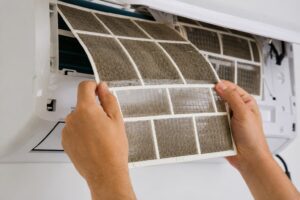
Your air filter has one main job: to catch dust, pollen, pet dander, and other particles before they move through your HVAC system and back into your home. A clean filter keeps that air moving freely and traps the junk you do not want to breathe.
When the filter clogs, two things happen. First, airflow drops, so your system works harder and cools less evenly. Second, the filter can no longer hold new particles, so more dust, allergens, and pollutants slip through and circulate through every room. In a humid climate, trapped moisture in a dirty filter can also invite mold and bacteria to grow, which lowers your air quality even further.
Dirty Air Filter Symptoms in the House You Might Be Overlooking
The signs of a dirty filter are easy to miss because they build up slowly. If you notice several of these dirty air filter symptoms in the house, it is time to check your filter:
- Dust settling on furniture again soon after cleaning.
- Air that feels stuffy, stale, or heavy.
- A musty or dusty smell when the system runs.
- More sneezing, coughing, or itchy eyes indoors than outdoors.
- Rooms that cool unevenly or airflow that feels weak.
- A higher electric bill from a system that has to work harder.
None of these mean an emergency, but together they point to poor airflow and lower air quality. A quick filter check is the easiest place to start.
Can a Dirty Air Conditioner Filter Make You Sick? What the Research Says
So, can a dirty air conditioner filter make you sick? The filter itself is not a germ, but a neglected filter can help spread the things that make people feel unwell. Health and environmental experts have long noted that indoor air often carries more pollutants than the air outside. A clogged AC filter adds to that problem by letting dust, allergens, mold spores, and airborne particles recirculate instead of trapping them.
For many people, the result is not a true illness but ongoing irritation: congestion, headaches, coughing, a scratchy throat, or tiredness that seems to ease when they leave the house. For people with allergies or asthma, the effect can be stronger.
You may also see the phrase “can a dirty cabin air filter make you sick.” That refers to the filter inside a car, which is a different system from your home. The idea is the same, though: a clogged filter means dirtier air. At Pride, we focus on the air quality inside your home, where your family spends the most time.
Who Is Most at Risk — Allergies, Asthma, and Vulnerable Households
Poor indoor air affects everyone, but some people feel it more. The highest risk is for young children, older adults, and anyone with allergies, asthma, or another respiratory condition. People with weakened immune systems are also more sensitive to mold, dust, and other airborne particles.
If you or someone in your home has ongoing symptoms that get worse indoors, cleaner air can make a real difference. And if symptoms are persistent or severe, it is always wise to speak with a doctor as well.
How Often Should You Replace Your Air Filter to Stay Safe?
As a general rule, replace a standard 1-inch filter every 1 to 3 months. Thicker filters can last longer. You will likely need to change yours more often if you have pets, allergies, or a busy household, or if anyone in your home smokes.
South Florida homes are a special case. Because we run the AC nearly year-round and the air stays humid, filters load up faster here than in many other places. Checking the filter monthly is a smart habit. Pairing that with regular AC maintenance keeps airflow strong, helps improve comfort and efficiency, and helps extend the life of your system.
When a Filter Change Is Not Enough — Signs of a Bigger Problem
Sometimes a fresh filter does not solve the problem. If dust, musty smells, or allergy symptoms stick around, the issue may be deeper in your system.
Common culprits include dirty or leaking ductwork, mold or moisture inside the system, and ducts that are the wrong size for your home, which simply means the airflow is not matched to the space. A trained technicians can inspect your ducts, repair or replace them when needed, and recommend indoor air quality solutions that help reduce contaminants and get your air moving the way it should.
Breathing easier at home starts with clean air. If you are in Pompano Beach, Fort Lauderdale, Boca Raton, or anywhere across Broward County and nearby South Florida, call Pride Air Conditioning & Plumbing today at 800-955-1086. We provide same-day service when available, performed by our own local technicians.
AI Summary
Can a dirty air filter make you sick? Not directly, but it lowers your home’s air quality and can make you feel worse. A clogged filter reduces airflow and lets dust, allergens, mold spores, and other pollutants recirculate, which can trigger allergies, aggravate asthma, and cause congestion, coughing, headaches, or fatigue. Children, older adults, and people with respiratory conditions are most at risk. Most home filters should be replaced every 1 to 3 months, and more often in humid South Florida. If symptoms continue after a filter change, the ductwork or HVAC system may need professional attention. Pride Air Conditioning & Plumbing offers indoor air quality and duct services across Broward County and can be reached at 800-955-1086.