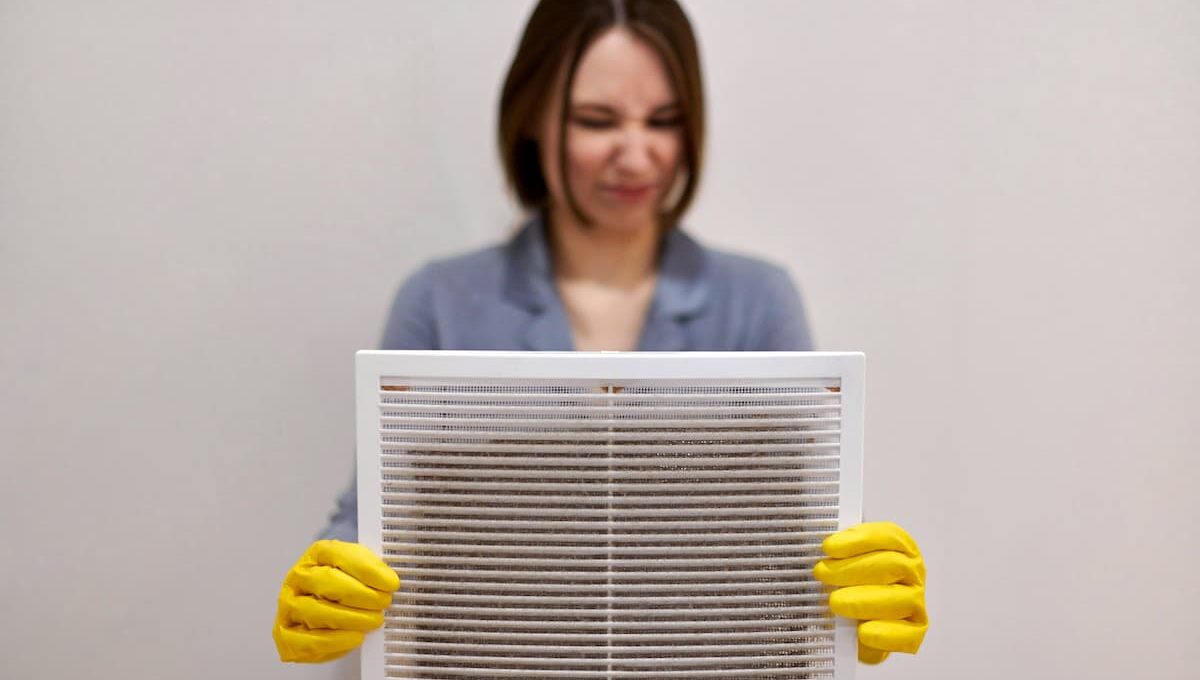
That stale, earthy odor drifting from your air vents is not something to ignore. A musty smell from vents is one of the most common signs that something is off inside your HVAC system — and what’s causing it matters a great deal. It could be as simple as a neglected filter, or it could point to a deeper moisture-and-mold issue affecting your family’s health. If you’ve been noticing persistent odors when the AC or heat kicks on, your indoor air quality may already be compromised.
Understanding the difference between a filter problem and a mold problem is the first step toward fixing it properly.
What a Musty Smell From Vents Indicates
A musty odor coming through your vents is almost always tied to one thing: biological growth. Mold, mildew, and biofilm all produce volatile organic compounds (VOCs) that give off a distinctive damp, stale smell.
The location and timing of the smell can offer important clues. If the odor appears as the system starts and fades after a few minutes, you’re likely dealing with stagnation from a dirty filter or dusty coils. If it lingers or worsens throughout the day, the source is likely deeper — inside the ductwork, drain pan, or around the evaporator coils.
Dirty Air Filters vs Moisture Buildup
A clogged air filter traps dust, debris, pet dander, and organic particles over time. When airflow pushes through that buildup, it can carry a mild musty odor into your living space. Replacing the filter — typically every 1–3 months, depending on household conditions — often resolves this type of smell quickly.
Moisture buildup is a more serious problem. When humidity levels are high, especially in South Florida, condensation forms on and around the evaporator coils. If that moisture does not drain properly, it creates ideal conditions for mold and mildew growth. An upgraded air filtration system can reduce particle load but will not eliminate moisture already in the system.
| Source | Smell Timing | Fix Required |
| Dirty filter | At startup, it fades quickly | Filter replacement |
| Moisture on coils | Persistent, worsens with use | Coil cleaning, drain check |
| Mold in ducts | Constant, throughout the home | Professional remediation |
| Stagnant drain pan | Stronger in humidity | Pan cleaning, drain flush |
How Mold Develops Inside HVAC Systems
HVAC systems move air but also move moisture. When warm, humid air passes over cold evaporator coils, condensation forms. If the drain line is clogged or the drain pan overflows, water sits and becomes a breeding ground for spores.
Mold growth can begin in as little as 24–48 hours under the right conditions, according to the U.S. Environmental Protection Agency. Once established inside ductwork or on coils, mold colonies release spores continuously into the air you circulate. The smell is one of the first detectable signs — but by the time you notice it, growth may already be widespread.
Ductwork Conditions That Cause Odors
Ducts run through attics, walls, and crawl spaces—areas prone to heat, humidity, and condensation. Over time, small leaks or poor insulation allow outside moisture to enter the duct system. Airflow stagnation in rarely used rooms or dead-end branches creates pockets where odor-causing contamination builds up.
Flex duct, commonly used in residential HVAC systems, can also trap debris in its inner lining. When the system isn’t running, these areas become still and warm — perfect conditions for mildew development. A visual inspection of accessible duct sections can sometimes reveal discoloration, soft spots, or visible growth.
Signs the Problem Is More Than a Filter Issue
Not every musty smell requires an emergency call, but certain signs indicate the issue goes beyond a simple filter change:
- The smell persists even after replacing the filter
- Odor is stronger near specific vents or in certain rooms
- You notice black, green, or white discoloration around vent covers
- Family members experience increased allergy symptoms or respiratory irritation
- The HVAC system has not been serviced or inspected in over a year
- There is visible water damage near the air handler or ductwork
If two or more of these apply, have a professional technician assess the system instead of attempting a DIY fix.
Health Concerns Linked to Moldy HVAC Systems
Mold spores traveling through an HVAC system can affect every room in the home. For most people, short-term exposure causes mild symptoms: sneezing, congestion, itchy eyes, or a scratchy throat. For those with asthma, allergies, or weakened immune systems, effects can be more severe.
The Centers for Disease Control and Prevention (CDC) recognizes mold exposure as a trigger for respiratory conditions and notes people with chronic lung diseases face higher risk. Children and older adults are particularly vulnerable. An HVAC system with active mold growth is not just an inconvenience but a continuous health exposure happening in daily life.
How to Identify the Source of the Smell
Tracking down the exact origin of a musty odor takes a systematic approach:
- Replace the air filter first — eliminate the simplest cause before moving on.
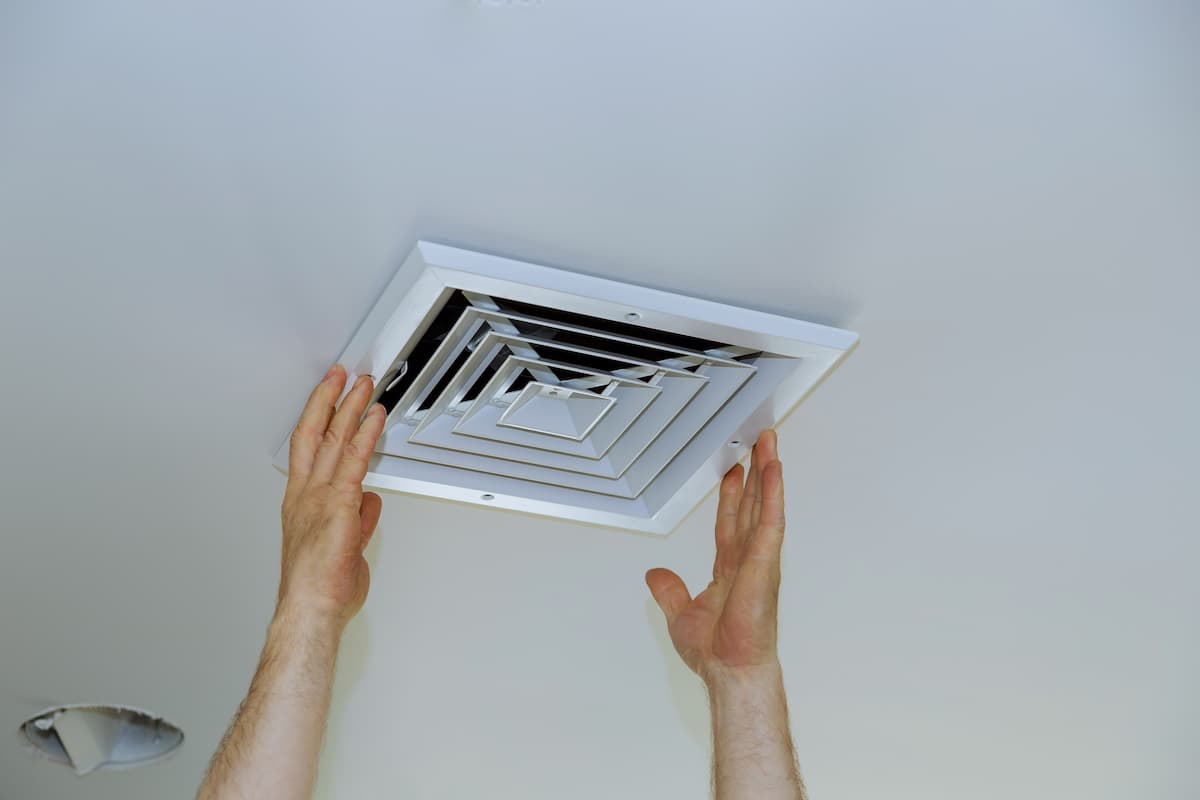
- Look at vent covers — remove a few and check the inside of the duct opening with a flashlight.
- Smell individual vents — isolate which areas of the home produce the strongest odor.
- Run the system briefly — note whether the smell intensifies with airflow or remains neutral.
These steps don’t reveal an obvious source, the problem is likely inside the ductwork or in a section of the system not accessible without specialized equipment. At that point, a professional HVAC inspection is the appropriate next step.
Preventing Musty HVAC Smells in the Future
Consistent maintenance is far more effective — and less expensive — than reactive repairs. A few habits significantly reduce the risk of musty odors returning:
- Change filters regularly: Every 1–3 months, or more often in dusty or pet-friendly homes.
- Schedule annual HVAC tune-ups: A technician will clean coils, flush the drain line, and check for early signs of growth.
- Control indoor humidity: Keep levels between 30–50% using the AC or a standalone dehumidifier.
- Keep drain lines clear: Flush the condensate drain monthly with diluted vinegar to prevent clogs.
- Ensure proper airflow: Don’t block vents or run the system with closed registers in unused rooms.
For homeowners dealing with recurring moisture and mold concerns, Pride’s guide to mold, moisture, and your home covers additional strategies for long-term prevention specific to Florida’s climate.
FAQ
Why does my AC smell musty only when I first turn it on?
A brief, musty odor at startup is often caused by dust and slight moisture on the coils or filter, which burn off once airflow stabilizes. If the smell disappears within 5–10 minutes, start with a filter replacement. If it lingers, have the coils and drain pan inspected.
Can I clean mold out of my HVAC system myself?
Minor surface mold on vent covers or accessible drain pans can be cleaned with an EPA-registered disinfectant. However, mold inside ductwork or on evaporator coils requires professional equipment and should not be treated as a DIY project. Improper handling can spread spores further through the system.
How do I know if my AC smells musty because of the ducts or the unit itself?
If the smell is consistent across all vents, the source is likely in the air handler or near the coils. If the odor is stronger from specific registers, that points toward localized contamination in a duct branch. A technician can use inspection cameras to confirm the source.
What does mold smell like in an HVAC system?
HVAC mold typically has a damp, earthy odor — similar to wet soil, old books, or a basement that hasn’t been aired out. It’s different from a burning or electrical smell (which signals a mechanical issue) and from a sweet or chemical odor (which may indicate refrigerant).
Why do my vents smell musty even after I replaced the filter?
If the smell continues after a filter change, the filter was not the root cause. The next likely culprits are the evaporator coils, the condensate drain pan, or the ductwork. Each requires a different inspection and cleaning approach. Persistent odors after a filter change are a clear signal to schedule a professional HVAC service.
Are signs of mold in the HVAC system always visible?
No — mold can grow in areas that are completely out of sight, including inside flex ducts, behind duct insulation, and on the back side of coils. Odor is often the first and only detectable sign before growth becomes visible. Don’t wait for visible mold to take action; the smell alone warrants investigation.